
Table of Contents
1. Equity-market foundations for growth
2. Core growth strategies in the equity-market
3. Tools, metrics, and diversification techniques
4. equity-market FAQ
5. Conclusion and next steps
Equity-market foundations for growth
The equity-market stands as a global arena where publicly traded shares are bought and sold, guiding capital allocation through price discovery. For investors seeking growth, understanding how public equities, stock indices, and market capitalization interact is essential. This framework underpins equity trading, clarifies how corporate performance translates into returns, and highlights the regulatory environments that govern major markets. It also informs how to invest in the equity market for long-term growth.
What is the equity-market?
A global arena where publicly traded shares are bought and sold, with price discovery guiding capital allocation.
Includes primary issuance and secondary trading, liquidity, and regulatory frameworks.
Public equities, stock indices, and market capitalization
Public equities are traded on exchanges; stock indices track broad or sector-specific performance.
Market capitalization groups companies by size (large, mid, small) and informs diversification and risk.
Key concepts for professional investors
Liquidity, volatility, and dispersion across sectors shape risk and return.
Benchmarks, factor signals, and capital-allocation dynamics guide stock-picking decisions.
These foundations inform disciplined entry, risk controls, and portfolio construction, shaping how professionals approach the equity-market to seek sustainable growth. They lay the groundwork for core growth strategies in the equity-market.
Core growth strategies in the equity-market
Durable growth in the equity-market comes from pairing rigorous stock selection with disciplined valuation and a clear view of risk. Successful approaches combine sustainable earnings trajectories, quality capital allocation, and scalable business models with prudent diversification. For beginners, broad exposure through low-cost index funds provides essential participation in public equities while you build experience with stock-level analysis.
Stock selection frameworks for growth
Focus on sustainable earnings growth, ROE quality, reinvestment efficiency, and scalable business models.
Target firms with multi-year earnings visibility, leveraging cash flows to compound value. Look for consistent EPS growth in the teens to mid-teens, rising or stable gross and operating margins, and ROE above 15% with steady capital efficiency. Prefer companies that reinvest capital at high ROIC, ideally above their cost of capital, and operate scalable models—software, platforms, or service-enabled solutions—that compound at scale rather than relying on one-off cycles.
Balance growth candidates with reasonable valuation to avoid overpaying for momentum.
Growth helps, but price matters. Use relative valuation tools such as price/earnings, price/book, or EV/EBITDA in the context of growth prospects, not in isolation. A PEG ratio near or below 1.5, or a conservative EV/EBITDA relative to growth expectations, can help avoid paying a premium for momentum that underperforms in softer markets.
For beginners, consider the best equity market funds for beginners: broad-market, low-cost index funds to gain essential exposure.
Examples include broad-market vehicles with ultra-low expense ratios, such as VTI or SCHB, which track wide swaths of public equities. These funds deliver diversified exposure to stock market performance and stock indices, enabling learning while reducing single-name risk.
Combining quantitative signals with qualitative analysis
Incorporate earnings revisions, revenue growth, cash flow quality, and return on invested capital.
Quant signals—earnings-per-share revisions, accelerating revenue, and solid free cash flow margins—echo future performance. A stock with rising consensus estimates, 12–20% revenue growth, and robust FCF generation often reflects a sustainable operating model. Evaluate ROIC trends to confirm capital is employed efficiently.
Assess management quality, governance, competitive moat, and industry dynamics.
Management’s capital-allocation decisions, insider ownership, and governance practices matter. Look for durable moats—brand strength, network effects, or cost leadership—and favorable industry dynamics, such as rising demand or scalable demand drivers. Combine these qualitative aspects with the quantitative signals to form a holistic view.
Implementation considerations: fees, liquidity, and timing
Prefer low-cost, broad-market exposure for beginners, then layer in select active ideas as experience grows.
Start with broad-market index funds to establish a foundation, then add targeted positions as you gain comfort with stock-picking and risk control.
Check liquidity and bid-ask spreads; align trading costs with your horizon and turnover goals.
Prefer liquid securities with tight bid-ask spreads to minimize execution slippage. For longer horizons, keep turnover modest to manage trading costs; for shorter horizons, monitor liquidity carefully to avoid illiquid positions eroding performance.
These approaches feed into the tools, metrics, and diversification techniques that help manage risk and capture growth across the equity-market.
Tools, metrics, and diversification techniques
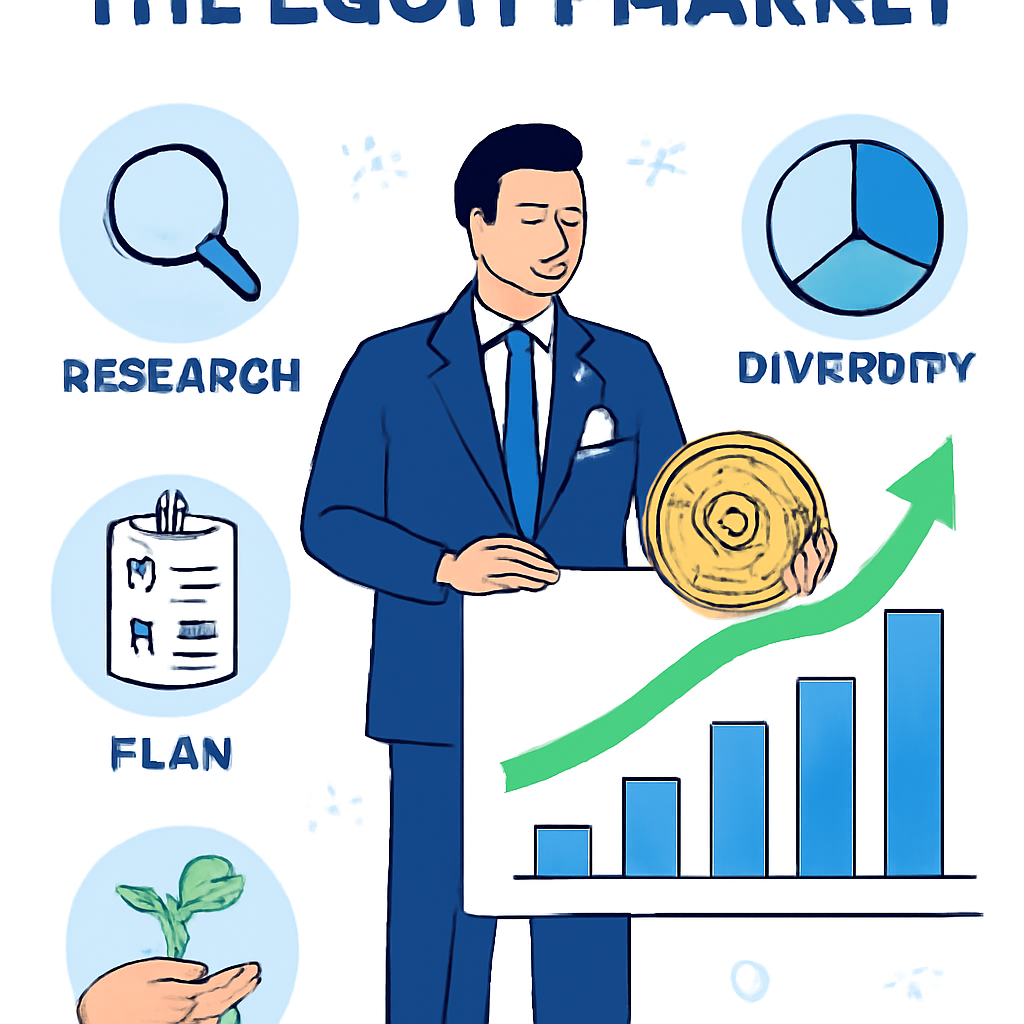
A disciplined approach to the equity-market combines robust diversification, clear risk controls, and disciplined benchmarking. By aligning sector, geography, and market-cap exposures with transparent metrics, portfolios can endure cycles while capturing broad opportunities across public equities.
Diversification across sectors, geographies, and market caps
- #### Allocate across sectors, regions, and cap sizes to reduce single-factor risk.
Allocate across 6-8 core sectors (for example technology, healthcare, financials, consumer staples, industrials, energy, utilities, real estate) and distribute roughly across US, Europe, Asia-Pacific, and emerging markets. Use three market-cap buckets—large (40-60%), mid (20-30%), and small (10-20%)—and apply drift bands (±5–10%) with a quarterly rebalance. Implement via low-cost index funds and ETFs that target broad indices, sector sleeves, and regional exposures; for instance, a core US total-market ETF, a developed-markets ex-US fund, and a small-/mid-cap or regional ETF to fill gaps.
- #### Implement strategies for diversifying an equity-market portfolio across sectors, geographies, and market caps.
Avoid home-country bias and overconcentration by setting minimum exposure floors to non-domestic regions and tilting toward value or quality factors to diversify risk. Cap any single name to 2–3% and cap a country’s share to 40% of the portfolio to reduce idiosyncratic risk. Maintain liquidity with a cash buffer and use periodic rebalancing to preserve the target structure, ensuring you’re not simply chasing last year’s winners.
- #### Use ETFs and funds to access global public equities efficiently.
Leverage broad-market core funds for backbone exposure and supplement with sector and regional ETFs to adjust tilt quickly. Favor funds with low expense ratios (often 0.05–0.20%), high liquidity, and transparent index methodologies. This approach keeps transaction costs predictable and enables scalable diversification as your equity-market exposure evolves.
Risk controls and portfolio management
- #### Apply position sizing, stop-loss rules, and periodic rebalancing to control risk.
Implement a position-sizing framework (for example, cap any single position at 5–10% of the portfolio). Use simple stop-loss or trailing stop approaches for more volatile holdings and enforce a disciplined rebalancing cadence (quarterly or when drift exceeds 5–10%). Pair these with a liquidity plan so you can exit underperformers without forcing undesirable trades.
- #### Monitor correlations and adjust exposures as regimes shift.
Track rolling correlations across major asset groups; when correlations rise in downturns, consider modest hedges or defensive tilts (quality, dividends, or lower-beta names) to reduce portfolio-wide drawdown. Reassess sector and regional bets as macro regimes evolve, ensuring you don’t end up with a concentrated exposure during regime shifts.
Benchmarking and monitoring with stock indices and market capitalization diagnostics
- #### Track performance against broad and sector-specific benchmarks and cap-structure metrics.
Compare realized returns to broad benchmarks such as a global or regional equity index and to key sector indices. Monitor cap-structure diagnostics—average and median market cap, distribution across large/mid/small caps, and turnover—to ensure the portfolio’s cap profile remains aligned with targets and risk appetite.
- #### Interpret deviations to inform rebalancing and strategy adjustments.
When active returns diverge from benchmarks, diagnose drivers: sector concentration, geographic drift, or cap-structure misalignment. Use these insights to rebalance toward target weights, reassess factor tilts, and adjust future allocations to align with the long-run equity-market strategy.
equity-market FAQ
Equity-market ownership in publicly traded companies is represented by stock and related instruments. Success hinges on discipline, cost awareness, and a clear growth plan. These FAQs cover how to start investing, how it differs from bonds, and practical diversification.
How do I start investing in the equity market?
Begin with clear goals and risk tolerance. For those asking how to invest in the equity market, open a brokerage and choose a practical starting approach: low-cost index funds or ETFs that cover broad public equities. Benchmark against stock indices like the S&P 500.
Practical steps
- Define annual contribution and risk limit.
- Choose a broad, low-cost fund.
- Set up automatic investments.
- Reinvest dividends.
What are the differences between the equity market and the bond market?
Equity represents ownership; bonds are debt with fixed income. Equities offer higher long-run upside and more volatility, while bonds provide income and capital preservation. Bond prices respond to rates; equity prices reflect earnings and multiples.
Key contrasts
- Ownership vs creditor relationship
- Returns: appreciation/dividends vs interest
- Priority in liquidation: debt before equity
- Sensitivity: earnings vs rates
Which strategies help diversify an equity-market portfolio?
Diversify across sectors, geographies, and market-cap tiers to reduce idiosyncratic risk. Rely on asset allocation and broad-market funds for beginners. Regular rebalancing helps manage risk through changing stock-market trends and analysis for 2025.
Actionable tips
- Rebalance quarterly to target mix
- Choose low-cost index funds or ETFs
- Include international exposure
- Avoid single holdings concentration
Conclusion and next steps
A disciplined approach to the equity-market combines growth fundamentals with thoughtful diversification. Professionals can use this framework to navigate public equities, balance stock-market exposure with risk controls, and stay aligned with long-term goals across regions and capitalization sizes.
Key takeaways from the playbook
Core principles of disciplined equity-market investing
This playbook highlights how to invest in the equity-market with discipline, focusing on growth fundamentals and diversification. Build a framework around sustainable earnings growth, durable competitive advantages, and strong balance sheets. Diversify across regions (US, Europe, Asia-Pacific), market capitalizations (large-, mid-, small-cap), and sectors to reduce idiosyncratic risk. Track market capitalization dynamics to understand leadership cycles and use stock indices as clear benchmarks for performance and discipline.
Balance passive exposure with selective active ideas and cost considerations
Core exposure should lean toward low-cost vehicles: broad-market ETFs or index funds. A practical starting point is 60-70% in passive exposure, with 30-40% reserved for selective, high-conviction ideas where you have edge or insight. Keep turnover modest to protect against tax drag and trading costs. Example allocations: 60% total-market ETF, 20% regional ETF (e.g., Europe or Asia-Pacific), 20% selective picks in well-researched growth names with solid fundamentals and visible catalysts. Emphasize cost discipline by favoring funds with low expense ratios and transparent holdings.
Practical starter checklist for professionals
Define risk tolerance, horizon, and target allocations by region, sector, and capitalization
Begin with a clear risk-tolerance assessment and a defined investment horizon (e.g., 5–10 years). Set target allocations such as US 40%, developed ex-US 25%, emerging markets 15%, with capitalization tilts toward large/mid-cap (e.g., 60%), and small-cap exposure (e.g., 20%). Align sector exposure to cyclical and defensive balances that reflect your view on economic cycles and sector leadership. Document these targets and revisit them as circumstances change.
Select appropriate equity-market funds or ETFs and establish a regular review cadence
Choose at least one broad-market ETF or total-market fund, plus one regional or international ETF to diversify geographic risk. Consider 1–2 thematic or sector funds only if you have a well-supported thesis. Establish a disciplined review cadence (quarterly or semiannual) and rebalance when any position strays beyond a 5–10% drift from its target allocation.
Recommended resources and next steps
Follow equity-market trends and analysis for 2025
Track ongoing equity-market trends, earnings seasons, and macro indicators to gauge momentum and risk. Monitor key stock indices and how they interact with regional growth differentials. Use these signals to refine your allocation stance and identify areas of potential opportunity or risk.
Monitor stock indices and macro data; leverage credible research sources
Rely on reputable sources for macro data, central-bank communications, and independent research. Schedule regular reviews of performance against benchmarks and adjust holdings in response to structural changes in markets, not just short-term volatility. This disciplined cadence supports informed decisions across public equities and the broader equity-market landscape.