
Table of Contents
1. Equity-market Overview for Long-Term Investing
2. Foundations of the Equity-Market
3. Strategies for Investing in Public Equities
4. equity-market FAQ
5. Conclusion and Next Steps for Professionals
Equity-market Overview for Long-Term Investing
What is the equity-market?
Defined as the public arena where company shares are traded, including primary and secondary markets; it involves institutions, funds, and individual investors across liquidity spectrums.
Why long-term investing matters in public equities
Over decades, compounding can outpace short-term bets, delivering sustainable growth in the equity-market.
Diversification and patient rebalancing reduce noise from volatility in public equities, supporting steadier outcomes for long-horizon portfolios.
How this playbook is structured for professionals
Evidence-based concepts, strategies, and practical steps for executives and portfolio managers, with governance considerations and risk controls, including benchmark selection and decision-rights clarity, aligned with best practices for long-term equity-market investing and robust equity investments.
Checklist-style guidance with governance and policy references to public equities, designed for clear execution and ongoing monitoring, covering pre-trade screens, execution discipline, post-trade reconciliation, and audit trails to navigate stock market trends and volatility in public equity markets.
For readers new to investing, practical steps outline how to invest in the equity market for beginners, with emphasis on risk capacity, a guided learning path, initial allocations, fee awareness, and awareness of factors influencing equity market volatility and common pitfalls. This disciplined framework underpins stock-market analysis and informed investments, setting the stage for Foundations of the Equity-Market.
Foundations of the Equity-Market
The equity-market is where capital flows to growth, value, and innovation. A solid grasp of participants, metrics, and volatility drivers supports clearer stock market analysis and more deliberate equity investments. This foundation helps both newcomers and seasoned investors navigate public equity markets with confidence.
Public equity markets: players and mechanics
Players and roles
- Investors, funds, issuers, and intermediaries shape liquidity and price discovery. Retail investors, pension funds, and hedge funds place orders that set near-term momentum, while underwriters, brokers, and exchanges ensure transparent execution and accurate pricing.
Market structure and liquidity
- Primary markets (issuances) vs secondary markets (trading) and liquidity considerations. IPOs and seasoned offerings supply capital to issuers, while secondary trading on exchanges provides ongoing liquidity. Tight bid-ask spreads, depth in the order book, and robust clearing systems are markers of a healthy equity-market environment.
Key metrics and indicators for stock market analysis
Valuation metrics
- Valuation anchors such as price-to-earnings (P/E), dividend yield, and earnings growth guide relative appeal. For example, a mature company trading at a P/E around 15–20 with a 3–4% dividend yield may look attractive if earnings are growing in the high single digits or better. Price-to-book, free cash flow yield, and return on invested capital add layers for cross-sector comparison.
Benchmarks and indices
- Benchmarks provide performance gauges for equity investments. Broad indices like the S&P 500 approximate the large-cap public equity market, while global or sector-specific indices (e.g., MSCI World, MSCI Europe, or technology-focused peers) help isolate trends. Compare stock performance to these indices, and assess contribution from earnings, multiple expansion, or multiple contraction.
Understanding equity market volatility and its drivers
Macro policy and interest rates
- Central bank actions, inflation expectations, and yield curve shifts shape discount rates and equity valuations. Rate increases typically compress valuation multiples, while rate cuts can support multiple expansion.
Economic cycles
- Expansion boosts earnings visibility; recession compresses margins and raises discount-rate sensitivity. Cyclical sectors respond differently from defensives, affecting sector rotation and risk posture.
Geopolitics, liquidity conditions, and sentiment
- Trade disputes, elections, or sanctions alter risk premia and capital flows. Tight liquidity and risk-on/risk-off sentiment amplify moves, even when fundamentals remain steady.
That context informs practical approaches to investing in public equities, helping align risk, time horizon, and return objectives with disciplined decision-making. It sets the stage for actionable strategies for investing in public equities.
Strategies for Investing in Public Equities
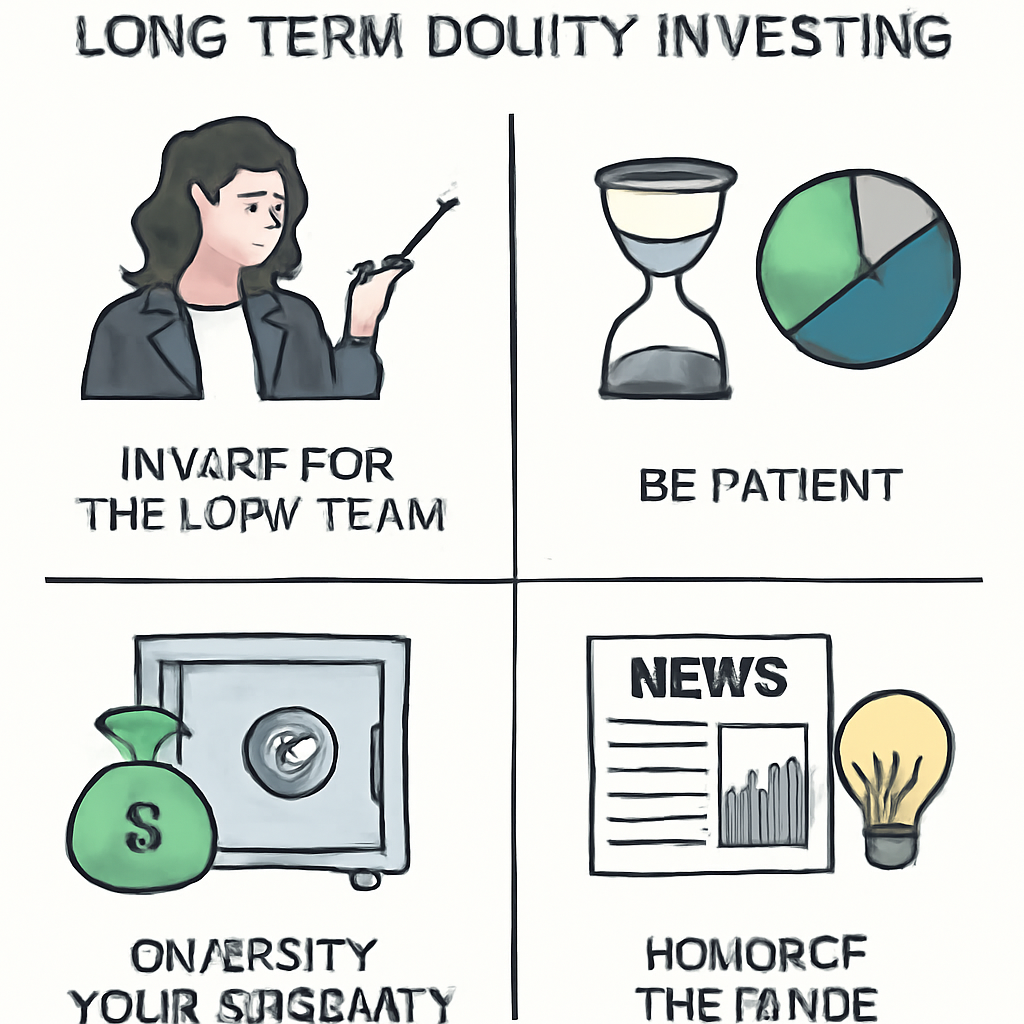
Public equity markets offer a path to long-term growth through disciplined, rules-based approaches. The following strategies blend exposure to stock market trends with practical risk controls, helping investors navigate equity investments with clarity and confidence.
Core long-term strategies
Dollar-cost averaging to reduce timing risk
Invest a fixed amount at regular intervals, regardless of price. This approach smooths purchase prices over time and reduces the temptation to time the market. Example: investing $600 every month into a broad equity-market index fund for 10 years can capture upside with rising markets while buying more shares on pullbacks, mitigating emotion-driven decisions sparked by equity market volatility.
Beginner-friendly onboarding: how to invest in the equity market for beginners with a simple, rules-based approach
Start with a lightweight, rules-based plan:
- Define risk tolerance and investment horizon, then choose broad, low-cost funds (e.g., a global equity index and a core bond fund).
- Automate contributions and set annual check-ins instead of monthly churn.
- Favor simple, transparent products; minimize fees and taxes by using tax-advantaged accounts where available.
- Embrace a two-fund or three-fund starter portfolio and scale complexity as comfort grows.
Portfolio construction and diversification in the equity-market
Asset allocation aligned with risk tolerance and investment horizon
Align allocations with your profile:
- Conservative: about 40% stocks / 60% bonds.
- Balanced: around 60% stocks / 40% bonds.
- Growth: roughly 80% stocks / 20% bonds.
Include global exposure to reduce concentration risk and improve diversification within the equity-market. Revisit allocations when personal circumstances or market conditions shift.
Regular rebalancing cadence (annual or biannual)
Schedule annual or biannual rebalancing to maintain target risk. If equities drift significantly due to market moves, trim winners and reinvest into underperformers to keep the plan aligned with long-term goals. Tax considerations matter; use tax-advantaged accounts where possible and be mindful of tax-loss harvesting opportunities in taxable accounts.
Incorporating stock market trends into decision-making
Identify secular vs cyclical trends to guide allocation decisions
Differentiate long-term secular drivers (demographics, technology adoption, globalization) from shorter, cyclical swings tied to the business cycle and interest rates. Let secular trends guide broad exposure decisions, while cyclical insights inform tactical tilts toward sectors likely to benefit in a given phase of the cycle.
Back-test rules and avoid overfitting to short-term noise
Before adopting a trend-based rule, test it across multiple market regimes with clean, out-of-sample data. Prefer simple rules over complex overlays, and verify robustness across different time periods. This discipline helps prevent overfitting to a single period of stock-market analysis and supports durable, evidence-based decisions for the equity-market.
equity-market FAQ
The equity-market landscape blends public equity markets with stock market trends, and it requires disciplined analysis to manage volatility and capture returns over time. Investors benefit from clear expectations around how volatility arises and how to position for the long run.
What factors influence equity-market volatility?
Volatility arises from macro data, corporate earnings surprises, monetary policy, geopolitical events, and liquidity shifts. Changes in inflation, growth momentum, and policy expectations create bid-ask swings in stock prices. Monitoring earnings reports, central-bank commentary, and liquidity indicators helps explain short-term moves in the equity market.
How do interest rates impact equity markets?
Interest rates shape discount rates and financing costs, pushing equity valuations up or down. Rising rates often compress multiples, particularly for growth-focused segments, and can tilt leadership toward financials and sectors with steady cash flow. Expect price adjustments when rate expectations change, even before actual hikes.
What are best practices for long-term equity market investing?
Focus on a durable plan: define goals and risk tolerance, diversify across geographies and sectors, and favor low-cost broad-market funds. Use dollar-cost averaging and automatic contributions, and rebalance annually to maintain target allocations. Stay invested through volatility, avoid timing the market, and prioritize quality, transparent holdings in the public equity markets.
Conclusion and Next Steps for Professionals
As markets evolve, a disciplined, evidence-based approach to equity-market investing remains the cornerstone of sustained performance. Professionals should couple rigorous stock market analysis with a clear risk framework, continuously calibrating strategies in public equity markets while keeping fees and tax implications in view. The following actions translate theory into practice across equity-market realities.
Key takeaways for sustained performance
Discipline, long-term focus, and alignment with risk tolerance
- Maintain a written investment policy that defines time horizon, drawdown tolerance, and position limits. Discipline reduces knee-jerk reactions during equity-market volatility and supports consistent compounding over time.
- Emphasize long-term focus: prefer patient, core exposures to public equities and resist frequent reallocations driven by short-term noise. This aligns portfolio behavior with expected return dynamics and helps weather episodic declines.
- Ensure alignment with risk tolerance by matching asset mix to objectives (for example, a moderate risk profile might target a balance like 60% equities with 40% fixed income) and revisiting it as circumstances change.
Cost-awareness and evidence-based decision making
- Track total cost of ownership: management or advisory fees, trading costs, bid-ask spreads, and tax drag. Small cost advantages compound meaningfully in equity-market performance over years.
- Ground decisions in evidence: rely on stock market analysis, backtested signals, and transparent performance data rather than anecdotes. Favor low-cost diversified exposure (e.g., broad public equity funds or select index-based strategies) when appropriate.
- Implement objective rebalancing thresholds (for example, drift beyond 5-10%) to maintain risk parity and avoid overtrading, preserving tax efficiency and liquidity.
Monitoring, learning, and adapting to changing market conditions
Regular performance reviews and rebalancing
- Schedule quarterly reviews comparing portfolio returns to relevant benchmarks and risk metrics. Rebalance toward target weights to control drift and preserve exposure to desired factors.
- Consider practical constraints such as taxes, turnover, and liquidity. Maintain a cash buffer to seize opportunities without compromising strategic allocations.
- Use concrete metrics: volatility, drawdowns, and beta relative to stock market indices to gauge ongoing alignment with objectives.
Ongoing education and scenario planning
- Invest in ongoing education about factors influencing equity-market volatility, the impact of interest rates on equity markets, and evolving public-equity strategies.
- Implement scenario planning and stress testing: model rising rates, inflation shocks, or geopolitical events to assess portfolio resilience; develop actions for each scenario.
- For beginners and seasoned professionals alike, formalize a simple roadmap for how to invest in the equity market for beginners, expanding into more sophisticated strategies over time while preserving a long-term commitment to best practices for long term equity market investing.